
Moving your college student into their first Dallas apartment
By Dallas Apartment Locating Team · Updated 2026-06-29
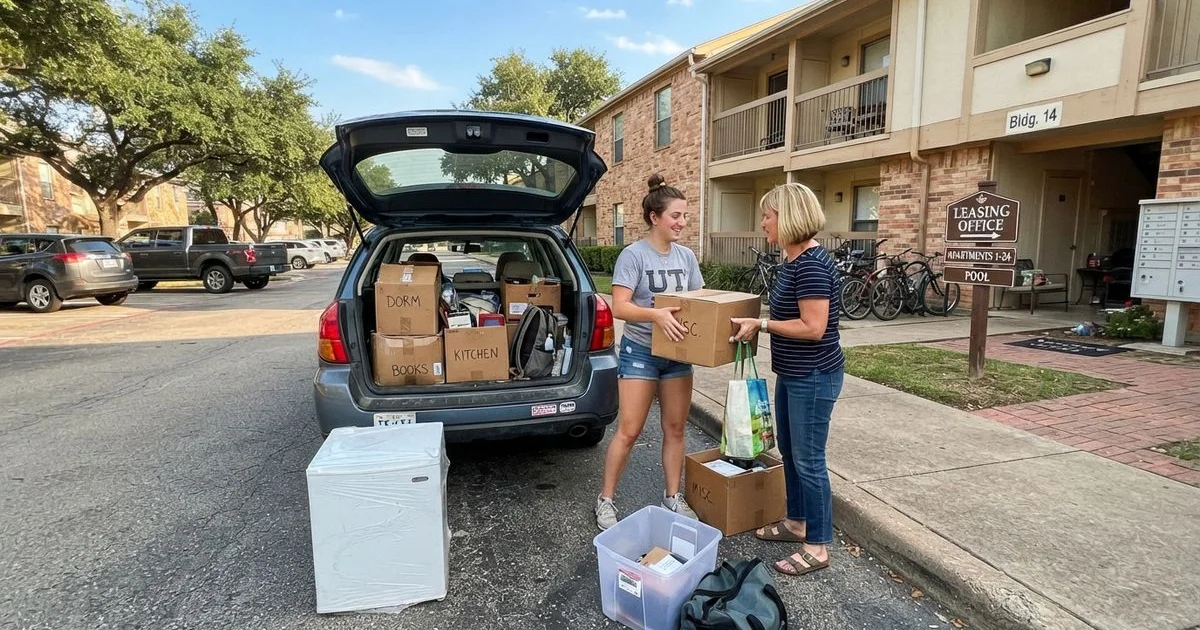
Your student’s first lease is likely their first real financial commitment, and it’s happening at the same time they’re adjusting to a new level of independence. A little preparation on the parent side goes a long way toward avoiding the most common first-lease mistakes, and it’s a good chance to teach financial habits that outlast this one lease.
Co-signing: what it actually means
Most students don’t have the income or credit history to qualify for a lease on their own, so student housing communities in Dallas commonly require a co-signer, usually a parent. Signing as a co-signer makes you legally responsible for the full lease if your student doesn’t pay, not just a portion of it. This is different from being listed as a second roommate on the lease, a co-signer backs the lease financially but has no right to live there.
Before you co-sign, understand that you’re on the hook for the full term unless the landlord formally releases you, and that this obligation can affect your own credit and ability to qualify for other loans or leases while it’s active.
Individual vs. joint leases
If your student is renting with roommates, the lease structure matters more than it might seem at first. An individual liability lease means each roommate is only responsible for their own portion of the rent. A joint and several liability lease makes every roommate responsible for the full rent if one person stops paying or moves out. Ask directly which structure the property uses, since it changes your family’s actual financial exposure if a roommate situation goes sideways.
| Lease type | What it means for your student |
|---|---|
| Individual liability | Responsible only for their own share of rent |
| Joint and several liability | Responsible for the full rent if a roommate defaults |
| Co-signed lease | You’re liable for the student’s full obligation if they don’t pay |
Budgeting beyond rent
Rent is the obvious cost, but factor in the security deposit, application and admin fees, and often a co-signer’s own credit check as part of the process. For a deeper look at where students can actually save, our guide to budget-friendly apartment hunting for Dallas college students breaks down what moves the price most. If your student is living near a specific campus, ask about proximity to public transit or whether parking is included, since campus parking is often limited and expensive on its own.

What to check before move-in day
Walk the unit together if you can, and photograph any existing damage before your student moves belongings in. Confirm utilities are actually connected and working, not just “set up.” Make sure your student has the leasing office’s contact information saved and knows how to submit a maintenance request, whether that’s an online portal, an app, or a phone number. It sounds basic, but it’s the detail that gets missed most often in the rush of move-in day.
Handling the first maintenance request
At some point, something in the unit will need fixing, and it’s often the first real test of how a property actually operates versus how it was pitched during the tour. Walk your student through how to submit a request properly (in writing or through an app, with a clear description and, if possible, a photo) rather than just mentioning it to a neighbor or waiting for staff to notice. It’s a small habit that saves a lot of frustration over the course of a lease.
Setting expectations early
Talk through what happens if a roommate situation doesn’t work out, what the process looks like for renewing or not renewing the lease, and who’s responsible for which bills. Getting this conversation out of the way before problems come up saves a lot of stress later, both for your student and for you as the co-signer footing the financial risk.
Our directory of Dallas apartment complexes makes it easier to compare student housing options by amenities, price, and resident feedback, and our methodology explains how we weigh responsiveness and consistency, useful signals for a population that’s often signing its first lease without much experience to compare against.
Questions people ask
- Do most Dallas student apartments require a co-signer?
- Often, yes. Most students don't have the income or credit history to qualify alone, so a parent or guardian co-signing is standard practice. The co-signer's income and credit get evaluated during the application just like the student's.
- What's the difference between a co-signer and a roommate on the lease?
- A co-signer guarantees the lease but doesn't live there and has no right to occupy the unit. A roommate on the lease is an additional tenant with equal obligations but doesn't back up anyone else's share of the rent.
- Should my student get an individual lease or sign with roommates?
- An individual liability lease means your student is only responsible for their own portion of rent, regardless of what roommates do. A joint lease makes everyone responsible for the full rent if one roommate stops paying, which is a real risk worth understanding before signing.
- What should we check before move-in day?
- Confirm utilities are set up and working, walk the unit for any existing damage and photograph it, and make sure your student has the leasing office's contact information and knows how to submit a maintenance request.